Tom YoungDigital Specialist
Mar 17, 2026 | Read time 7 min
The court reporter shortage crisis: data, causes, and what legal teams are doing about it
The court reporter shortage is reshaping litigation. Explore data, causes, and how legal teams are using digital reporting and AI transcription to adapt.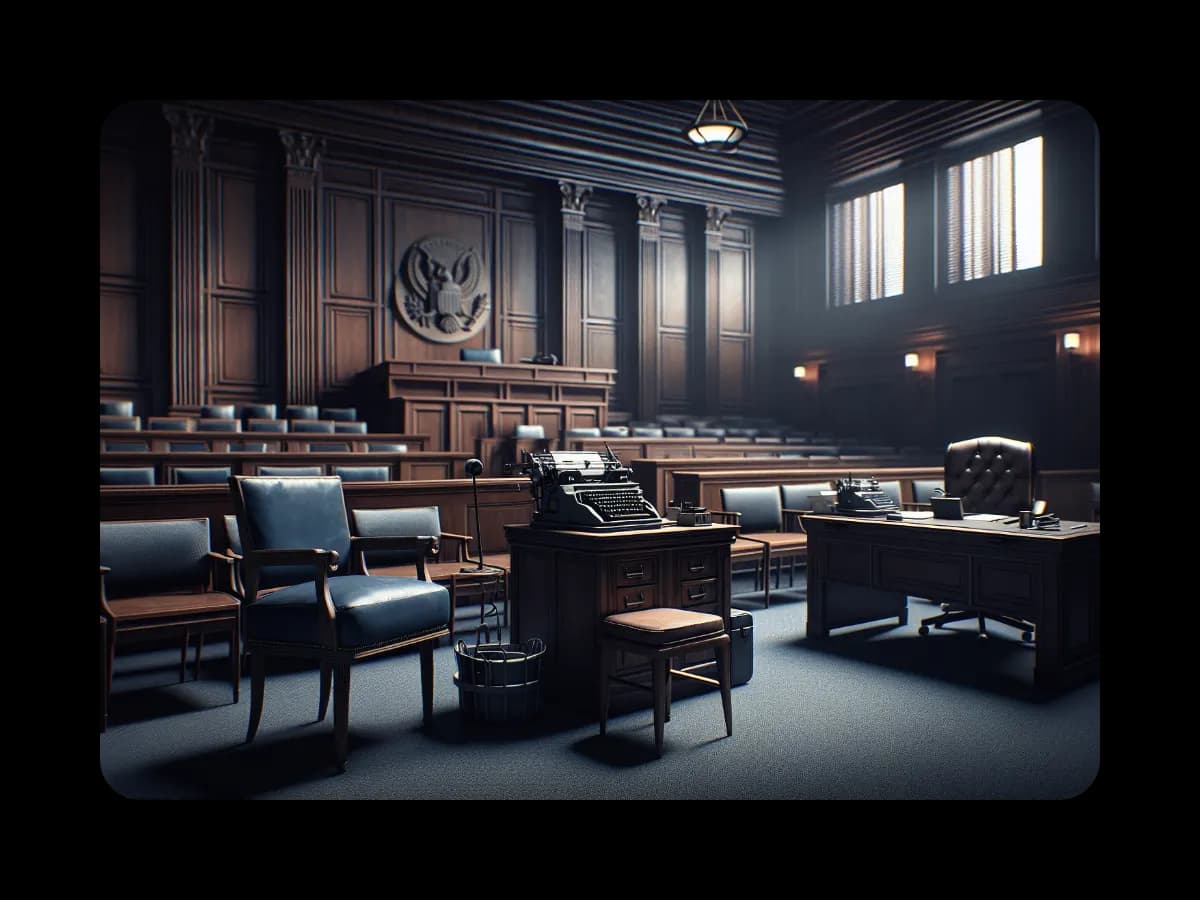
TL;DR
The court reporter shortage is a structural crisis, not a blip. The US has ~17,700 court reporters, retirements are outpacing new entrants, and California alone has logged 1.7M+ legal proceedings without a verbatim record since 2023.
The profession faces a collapsed training pipeline. Fewer certified court reporters are qualifying each year, training programs have halved, and the average NCRA member age is ~56.
Legal teams are adapting through digital court reporting and AI-assisted transcription. But certified court reporters remain essential, with AI acting as a force multiplier for court reporting agencies rather than a replacement.
Court reporters sit at the foundation of the legal record. Without a certified reporter in the room, depositions cannot be transcribed, appeals lose their evidentiary basis, and due process starts to look theoretical.
And yet, that foundation is now under serious strain. This shortage is not a staffing inconvenience or a temporary post-pandemic blip. It is a structural workforce crisis with measurable consequences for the legal system, for legal professionals managing active caseloads, and for litigants who depend on an accurate, timely transcript.
Scheduling delays, missing verbatim records, premium coverage rates, and slower appeals timelines are the operational reality. So understanding why the shortage exists, and which responses are actually working, is now a pressing legal operations question.
We explore the causes, impact and possible solutions below.
How severe is the court reporter shortage in numbers?
The U.S. Bureau of Labor Statistics puts the current court reporter workforce at approximately 17,700 jobs: a relatively small occupation serving high-consequence workflows across trial courts, appellate proceedings, and private depositions.
Annual openings average around 1,700, but the driver is not growth. Most of those openings exist because workers are leaving the field.
Wage-and-salary employment counts from the BLS Occupational Employment and Wage Statistics series tell a more pointed story. Payroll employment in the court reporter and simultaneous captioner category fell from 14,240 in May 2022 to 12,390 in May 2023. That figure excludes self-employed and freelance reporters, who account for around 26% of the workforce, so it is a partial picture. But it is a consistent, primary dataset, and the direction is clear.
The clearest public evidence of operational strain comes from California. The Judicial Council says courts employ approximately 1,071 FTE court reporters and may need “up to an additional 428 full-time court reporters” to meet minimum requirements. The same fact sheet describes an “ever-decreasing number of California-licensed court reporters” and reports 4,625 active California-licensed court reporters residing in the state as of June 1, 2025.
In Los Angeles, the Superior Court’s own crisis materials show the same pattern at county level. The Court’s dashboard reported 426,000+ proceedings without a verbatim record between Jan. 1, 2023 and Mar. 31, 2024, while the Court’s August 2024 release updated that figure to over 525,000 proceedings between Jan. 1, 2023 and June 30, 2024. The same release said the shortage had created a “constitutional crisis” for litigants in family law, probate, and unlimited civil proceedings.
As of the Court’s July 2024 dashboard, Los Angeles had 321 filled positions and 125 vacancies. Of 549 applications received, only 15 resulted in accepted offers, with an average of 88 days from application to acceptance. These are not anecdotal complaints. They are court-administered metrics describing a hiring pipeline under incredible and sustained structural pressure.
Shortage by pressure point
Pressure point | Key figure | Notes |
|---|---|---|
Wage-and-salary employment | Fell from 14,240 (May 2022) to 12,390 (May 2023) | Excludes self-employed; directional trend only (BLS OEWS) |
Annual replacement openings | ~1,700 per year (2024–2034) | Mostly exits: retirements and occupation transfers (BLS OOH) |
CA licensed reporters in-state | 4,625 active licensees (June 2025) | Down 25.6% since FY2009–10 (Judicial Council of California) |
New CA licenses issued | 121 in 2023–24 | Against replacement need of hundreds per year (Judicial Council of California) |
CA training programs | 8 remain open (down from 17 in 2010) | State-recognized programs only (Judicial Council of California) |
CA hearings without verbatim record | 1.7M+ since January 2023 | Unlimited civil, family, probate (Judicial Branch of California) |
LA County vacancy and hiring friction | 125 vacancies; 549 applicants yielded 15 offers; avg 88 days to hire | Superior Court of Los Angeles County dashboard, July 2024 |
Courts reporting staffing shortages | 70%; 61% expect shortages to continue | Not court-reporter-specific; broader court workforce (NCSC, Aug 2025) |
Why the shortage is getting worse, not better
The court reporter shortage is not a bad hiring cycle that will correct itself. It is the product of two converging forces: a shrinking and aging workforce on the supply side, and expanding demand for court reporting services across the legal system.
Neither force is self-correcting, and the gap between them is widening.
An aging workforce with no pipeline to replace it
The shortage is not simply a bad hiring cycle. It is a replacement problem. BLS projects about 1,700 openings a year even though employment is expected to show “little or no change” through 2034, because most openings are caused by people leaving the profession.
California’s pipeline data shows why the gap is widening. The Judicial Council reports that between FY 2009–10 and FY 2022–23 the number of active in-state licensees declined by 25.6%, while new license applications fell by 37.6%. In 2023–24, the state issued just 121 new individual licenses, and only eight recognized court reporting programs remained open, down from 17 in 2010.
The age profile reinforces the point. The same June 2025 fact sheet says the National Court Reporters Association reported an average member age of approximately 56 years old as of June 1, 2025, and estimates that 50% of court reporter employees were eligible for retirement as of Dec. 1, 2023.
These numbers represent a structural collapse in the court reporting profession's training infrastructure. Even aggressive recruitment cannot offset a pipeline that takes two to three years to produce a qualified reporter, trains a small cohort annually, and starts from a shrinking base of open programs.
Steno is a high-barrier skill with a long learning curve
Court reporting is hard to scale quickly because the training burden is real. BLS says community college and technical programs are common entry routes and that workers typically receive formal preparation plus on-the-job training, while California’s own Court Reporters Board says state-approved CSR programs are designed to take three to four years.
The skills threshold is also unusually high. California’s Court Reporters Board says the licensing exam requires 200 words per minute with a 97.5 percent accuracy rate, and describes court reporting school as effectively “a full-time job — for a while.” That helps explain why even aggressive recruitment cannot quickly rebuild supply.
BLS also notes that reporters must produce error-free work because transcripts serve as legal records, and that technology may improve efficiency but reporters are still needed to “review and edit digitally produced documentation.”
In other words, the job is both technically demanding and legally consequential.
Rising demand meets shrinking supply
Demand has not softened to match the shrinking workforce. In its August 2025 workforce findings, the National Center for State Courts said more than 70% of survey respondents reported staffing shortages in the last year and 61% expected shortages to continue.
NCSC added that these gaps were hitting “every level – from courtroom clerks to interpreters to court reporters.” At the same time, 20% reported delays in more than 30% of cases.
That broader court-system strain matters because this profession sits inside transcript-heavy workflows that do not disappear when staffing thins out: hearings still happen, depositions still need to be scheduled, and appeals still depend on the integrity of the record. The result is not abstract labor-market pressure but operational delay.
Private sector demand runs in parallel. Legal professionals in civil litigation and arbitration rely heavily on deposition transcripts. As legal teams have incorporated remote depositions into standard practice, the geographic pool of available reporters has widened in theory. It has not solved the underlying supply problem.
The court reporter gap: shrinking pipeline, rising demand, growing operational cost
Supply Collapse | Demand Pressure | Operational Impact |
|---|---|---|
Aging workforce nearing retirement | Civil depositions and discovery | Scheduling delays and premium rates |
Retirements outpacing new entrants | Remote proceedings expanding coverage needs | Transcript backlogs slowing discovery |
CA licenses down 25.6% since FY2009–10 | Arbitration and ADR growth | 1.7M+ CA hearings without verbatim record |
Training programs: 17 in 2010, 8 today | E-discovery and transcript-heavy litigation | Uneven rural access; geographic inequality |
Only 121 new CA licenses issued in 2023–24 | Appeals and family law matters | Appeal rights at risk; access to justice pressure |
Technology works best as capacity support. Human professionals and certified digital reporters remain central to oversight, review, and record integrity.
What the shortage actually costs legal teams
When proceedings move ahead without a verbatim record, the cost is not just inconvenience. In Jameson v. Desta, the California Supreme Court said the absence of a court reporter and the resulting lack of a verbatim record will “frequently be fatal” to a litigant’s ability to have claims of trial court error resolved on the merits on appeal.
Los Angeles has made that access problem unusually visible. Its August 2024 release says that over 525,000 family law, probate, and unlimited civil proceedings occurred without a verbatim record in LA County alone between Jan. 1, 2023 and June 30, 2024, and that many impacted litigants “cannot afford the $3,000 - $5,000 cost per day to hire a private court reporter.” The Court said this can make an appeal “essentially impossible.”
California’s statewide fact sheet adds a related cost signal: court-employed reporters’ median total salary plus benefits is estimated at $200,101, private-company rates average $2,580/day for a deposition and $3,300/day for a trial, and California courts spent $23.7 million on transcripts in FY 2023–24. That is the cost backdrop against which courts are trying to recruit, retain, and expand coverage.
Access to justice is the broadest consequence. Rural and under-resourced jurisdictions face acute geographic inequality in reporter availability. Urban trial courts with dedicated recruitment budgets, such as Los Angeles, are still struggling to fill roles. The situation in lower-resourced markets is correspondingly worse.
The three approaches legal teams are using to adapt
No single response has resolved the court reporter shortage. What is emerging instead is a set of practical adaptations used in combination: remote and hybrid deposition models, digital reporting, and AI-assisted transcription operating inside supervised workflows.
The strongest legal operations strategies are using elements of all three:
1. Remote and hybrid deposition models
The shift to remote depositions, accelerated during the pandemic, has had a modest positive effect on reporter availability. A reporter working remotely can cover proceedings in multiple locations without travel time, expanding effective capacity for routine depositions.
California offers a useful example of how courts are trying to extend reporter capacity without lowering the standard for the legal record. In 2024, the state enacted AB 3013, a remote court reporting measure that was chaptered on Sept. 14, 2024.
The law authorizes pilot projects in 11 superior courts to test whether licensed official reporters can produce the verbatim record from a remote location in specified proceedings, rather than being physically present in the courtroom.
The pilot provisions allow transcripts created through remote reporting to be used wherever a transcript of court proceedings is required, which makes the reform operationally significant rather than merely procedural.
Just as importantly, the bill is framed as a controlled workforce and infrastructure response, not a substitution of lower-standard recording for certified reporting. The Assembly analysis says the pilot can be performed only by full-time official reporters in participating superior courts, requires minimum courtroom and audio-visual standards, and is intended to test whether remote reporting is a feasible way to preserve an accurate and functional record for appeal while giving courts more staffing flexibility.
In that sense, AB 3013 supports the broader point: courts are not waiting for the labor market to fix itself. They are experimenting with ways to make a limited pool of qualified reporters cover more proceedings without giving up human oversight or transcript integrity.
So the practical limits are real. Audio quality in remote proceedings varies significantly. Speaker overlap, background noise, and poor microphone setups can create problems for any transcription method, human or automated. Remote reporting also requires careful process design to maintain the chain of custody and certification integrity that makes a transcript legally defensible.
2. Digital court reporters
Digital court reporting uses audio and video recording equipment, monitored by a trained operator, to capture the record in place of a stenographic reporter. A certified transcript is then produced from the recording, often by a scopist or transcriber working with the audio file.
The model has existed for decades and is used across a range of court systems and deposition settings. Certified digital reporters operate under defined training and certification requirements, though these vary considerably by state. California's legislative activity reflects growing interest in expanding electronic recording options in civil proceedings, particularly where a stenographic reporter is unavailable and a litigant cannot afford private coverage.
Regulatory status varies significantly by state and court type, and legal professionals evaluating digital reporting options should treat the regulatory picture as jurisdiction-specific. Voice writing, in which a reporter repeats spoken words into a mask-equipped device for later transcription, is another route into the reporting profession.
In California, voice writers now account for a meaningful proportion of new hires, reflecting a deliberate effort to widen the qualified reporting workforce.
Accuracy remains the primary performance criterion across all capture methods. Digital recordings require careful monitoring, good acoustics, and well-resourced post-production workflows. Where those conditions are met, digital reporting can bridge coverage gaps in the legal industry. Where they are not, transcript quality suffers.
Adaptation models compared
Model | Strengths | Constraints | Certification status | Best fit |
|---|---|---|---|---|
Stenographic reporter | Real-time record; high accuracy; strong chain of custody | Talent scarcity; long training; scheduling bottlenecks | Gold standard; accepted in all jurisdictions | All proceedings where a reporter is available |
Voice writer | Expands the pool of verbatim-capable professionals | Specialist training required; adoption varies by state | Accepted where statutory requirements are met; varies by jurisdiction | Courts and agencies seeking to widen their qualified workforce |
Digital court reporter | Captures a record when no stenographic reporter is available | Transcript produced post-hoc; quality depends on audio and monitoring | Authorized in a growing number of states; regulatory status varies significantly | Courts and proceedings without live stenographic coverage |
Remote reporting (licensed reporter off-site) | Increases effective reporter capacity across locations | Audio/video reliability critical; may complicate speaker management | Authorized in California (AB 3013, 2024); other states vary | Routine depositions and court proceedings with strong A/V infrastructure |
AI-assisted transcription with human review | Reduces first-pass transcription burden; improves throughput | Error risk in poor audio; requires governance and human oversight | Draft output must be reviewed, corrected, and certified by a qualified reporter | Court reporting agencies and reporters seeking to increase capacity without adding headcount |
3. AI-assisted transcription as a force multiplier
The BLS is direct about the role of technology in court reporting: it can improve transcription efficiency, but reporters are still needed to review and edit digitally produced documentation. That framing is the right starting point for any discussion of AI in the legal industry.
AI-assisted transcription, used inside a supervised workflow, can reduce the time court reporters spend on first-pass transcription. Real-time draft generation, automated timestamping, and batch processing of recorded proceedings can all reduce the mechanical burden on certified reporters and scopists.
The force multiplication effect is meaningful in a workforce as constrained as this one. A reporter spending less time on first-pass transcription can take on more proceedings. A court reporting agency with AI-assisted drafting in its workflow can process deposition libraries faster and at lower cost per transcript, making reporting services more accessible to legal teams managing high transcript volumes.
The important qualification is audio conditions. Research into automatic speech recognition in legal settings is clear that degraded, indistinct, or forensically complex audio is not suitable for fully automated analysis. Overlapping speakers, non-standard accents, heavy legal jargon, and background noise all reduce reliability. These are common conditions in real courtrooms and depositions.
What AI-assisted court reporting looks like in practice
The most effective AI-assisted court reporting workflows keep the certified court reporter in the loop at every stage that matters legally.
A typical workflow operates as follows: the AI layer produces a draft transcript in real time or from a recording. The certified reporter or scopist reviews the draft, corrects errors, resolves speaker attributions, and flags sections requiring attention. The reporter then certifies the final transcript.
This design maintains the human accountability that underpins the record. The AI handles speed and throughput. The reporter handles accuracy, judgment, and certification.
Courts and legal professionals are developing governance expectations around AI use in this context, including verification requirements, confidentiality restrictions, and transparency about how AI outputs are generated. Uploading confidential case audio to public or uncertified AI tools is a compliance risk that proper workflow design addresses directly.
The Speechmatics platform illustrates this model in operation. Certified digital reporters use it to generate real-time draft transcripts during proceedings, including in air-gapped courtrooms with no internet connection, then edit and certify the output using Eclipse's interface. The AI does not produce the official record. The reporter does.
What legal teams should look for in an AI transcription partner
Selecting an AI transcription partner for legal workflows requires asking questions that vendor benchmarks rarely answer (see our below checklist for more information). Some factors to consider:
Audio robustness is the starting point. The tool must perform on real-world legal audio: multiple speakers, varied accents and dialects, courtroom acoustics, and recorded deposition environments. Models trained only on clean audio will fail in practice.
Deployment flexibility matters for compliance. Legal proceedings often involve confidential or privileged material. A partner offering on-premises or on-device deployment, in addition to cloud, gives legal teams control over where audio and transcripts reside. On-device capability also means the tool can operate in restricted network environments.
Security certifications are a baseline requirement. ISO 27001, SOC 2 Type II, GDPR, and HIPAA compliance are standard expectations for legal technology procurement.
Workflow integration determines adoption. A tool that requires reporters to abandon their existing certification workflow is unlikely to be used consistently after the pilot phase ends.
Reporter adoption signals quality. Tools that experienced court reporters choose to continue using after the pilot have passed a real-world quality test that no benchmark can replicate.
Buyer checklist: evaluating an AI transcription partner
Evaluation criterion | What to ask | Why it matters |
|---|---|---|
Audio robustness | How does accuracy hold up with overlapping speakers, background noise, and varied accents? | Legal audio is rarely clean; a tool trained only on studio conditions will fail in practice |
Deployment options | Does the tool support on-premises or on-device deployment, not only cloud? | Confidential proceedings and air-gapped courtrooms require data-local options |
Security certifications | Is the platform ISO 27001, SOC 2 Type II, HIPAA, and GDPR compliant? | Baseline requirement for legal procurement; protects privileged and sensitive material |
Workflow integration | Does the tool integrate with existing court reporting software, or require a separate platform? | Adoption fails if reporters must abandon their existing certification workflow |
Reporter adoption | Are experienced reporters choosing to continue using the tool after the pilot? | Real-world retention by practitioners is a stronger quality signal than vendor benchmarks |
Governance support | Does the platform distinguish clearly between draft AI output and certified transcripts? | Courts increasingly expect transparency about AI use and verification of AI-generated content |
Final thoughts
The shortage of court reporters is a structural workforce crisis, not a cyclical problem, and it is not improving on its own. National labor data, California court system metrics, and local courthouse dashboards all point in the same direction: demand is rising, supply is shrinking, and the gap has real consequences for the legal record, for access to justice, and for legal professionals managing time-sensitive proceedings.
Digital court reporting and AI-assisted transcription are not fringe experiments. They are practical responses already embedded in real court reporting workflows and legislative reform across the legal industry. Neither displaces the certified reporter. Both extend what a smaller workforce can handle.
Technology works best in this context as infrastructure: reducing the mechanical burden on qualified reporters, improving throughput for court reporting agencies under capacity pressure, and helping legal professionals maintain accurate, timely transcripts despite workforce constraints they cannot immediately change.
The human court reporter remains the legal system's most important safeguard for the verbatim record. The best AI tools are designed to support that role, not route around it.
FAQs
The shortage has three main causes: a shrinking training pipeline that produces fewer new reporters each year, high replacement demand driven by retirements and workforce exits, and legal constraints in some jurisdictions that limit substitute recording methods. These factors reinforce each other and are not quickly reversed.
BLS data puts the occupation at around 17,700 jobs with roughly 1,700 annual openings, most driven by exits from the field. In California, the Judicial Council reports that more than 1.7 million hearings have proceeded without a verbatim record since January 2023, and courts need up to 428 additional full-time reporters to meet minimum requirements.
The court reporting profession has a high replacement churn that BLS attributes primarily to retirements and occupational transfers. Combined with declining enrolment in training programs and fewer new licenses being issued each year, exits consistently outpace new entrants.
Digital court reporting uses audio and video recording equipment, monitored by a trained operator, to capture a legal proceeding. A certified transcript is produced from the recording after the fact. It is not the same as stenographic reporting, and regulatory acceptance varies significantly by state and court type.
No. Stenographic court reporters create a real-time verbatim record using a stenotype machine. Certified digital court reporters monitor recording equipment and produce transcripts from audio files. Both can result in a certified transcript, but the capture method, training requirements, and regulatory treatment differ.
Legal professionals face scheduling difficulties, higher coverage costs, slower transcript turnaround, and, in some jurisdictions, the risk that proceedings proceed without any verbatim record at all. In California, missing records have been linked to the inability of litigants to appeal in family law, probate, and unlimited civil matters.
Where trial courts cannot provide a verbatim record and private reporters cost $3,000 to $5,000 per day, self-represented litigants and those without resources to hire private reporters may be unable to appeal decisions effectively. Rural and under-resourced courts face the sharpest geographic inequalities in reporter availability.
No. BLS states explicitly that technology can improve transcription efficiency, but court reporters are still needed to review and edit digitally produced documentation. In challenging audio conditions such as overlapping speakers, strong accents, or background noise, fully automated transcription is unreliable. Human oversight, correction, and certification remain essential for any official record.
AI generates a draft transcript in real time or from a recording. A certified court reporter or scopist reviews, corrects, and certifies the output. The AI handles speed and first-pass throughput. The reporter handles accuracy, speaker attribution, judgment, and the legally significant act of certification.
Prioritize audio robustness in real-world conditions, deployment flexibility including on-premises or on-device options, security certifications appropriate for legal data, integration with existing court reporting services, and evidence of adoption by experienced court reporters rather than only vendor-supplied benchmark performance.
Related Articles
- TechnicalMar 3, 2026
Understanding TDT: The Mechanism Behind the Fastest Models on the Open ASR Leaderboard
 Oliver Parish Machine Learning Engineer
 - Use CasesFeb 18, 2026
Why AI-native EHR platforms will treat speech as core infrastructure in 2026
 Vamsi EdaraFounder and CEO, Edvak EHR
 - TechnicalFeb 13, 2026
Speed you can trust: The STT metrics that matter for voice agents
 Archie McMullanSpeechmatics Graduate
Latest Articles
![[alt: Sound waveform overlaid on legal documents representing word error rate in legal transcription]](/_next/image?url=https%3A%2F%2Fimages.ctfassets.net%2Fyze1aysi0225%2FQRSezBsdLCxs1BVUN8hS7%2F2039e32c7e69124576ed85a9fb8f90c5%2Fblog-image-wide-carousel__1_.webp&w=3840&q=75)
Use Cases
What Word Error Rate Is Acceptable for Legal Transcription?
Word error rate for legal transcription has no single acceptable threshold. But knowing how accuracy, audio quality, and review obligations connect to real legal risk is what separates a reliable transcript from a costly one.
Mieke SmithSenior Writer
Technical
How Nvidia Dominates the HuggingFace Leaderboards in This Key Metric
Why predicting durations as well as tokens allows transducer models to skip frames and achieve up to 2.82X faster inference.
Oliver Parish Machine Learning Engineer
![[alt: Healthcare professionals in scrubs and lab coats walk briskly down a hospital corridor. A nurse uses a tablet while others carry patient charts and attend to a gurney. The setting conveys a busy, clinical environment focused on patient care.]](/_next/image?url=https%3A%2F%2Fimages.ctfassets.net%2Fyze1aysi0225%2F3TUGqo1FcOmT91WhT3fgbo%2F9a07c229c11f8cbe62e6e40a1f8682c7%2FImage_fx__8__1-wide-carousel.webp&w=3840&q=75)
Use Cases
Why AI-native EHR platforms will treat speech as core infrastructure in 2026
As clinical workflows become automated and AI-driven, real-time speech is shifting from a transcription feature to the foundational intelligence layer inside modern EHR systems.
Vamsi EdaraFounder and CEO, Edvak EHR
![[alt: Logos of Speechmatics and Edvak are displayed side by side, interconnected by a stylized x symbol. The background features soft, wavy lines in light blue, creating a modern and tech-focused aesthetic.]](/_next/image?url=https%3A%2F%2Fimages.ctfassets.net%2Fyze1aysi0225%2F7LI5VH9yspI5pKWFeiZBXC%2F92f6a47a06ab6a97fb7f5a953b998737%2FCyan-wide-carousel.webp&w=3840&q=75)
Company
One word changes everything: Speechmatics and Edvak EHR partner to make voice AI safe for clinical automation at scale
Turning real-time clinical speech into trusted, EHR-native automation.
SpeechmaticsEditorial Team